|
I built my first watercooled PC 8 years ago. I wanted to build something
most of my peers would cringe at; that's combining electrical components
with water. At the time I had no interest in overclocking or reducing fan
noise I just wanted to see if it could be done. There were some companies
that provided processor cooling blocks but nothing else. The remaining
components I would have to acquire myself. Fortunately the rest of the required
parts were easily obtained.
I decided to buy the best water pump I could find. Since this part is the heart
of the entire cooling system, I wanted to make sure it did not failure prematurely.
I found that Eheim makes a very good pump. I have had one for 8 years now and never
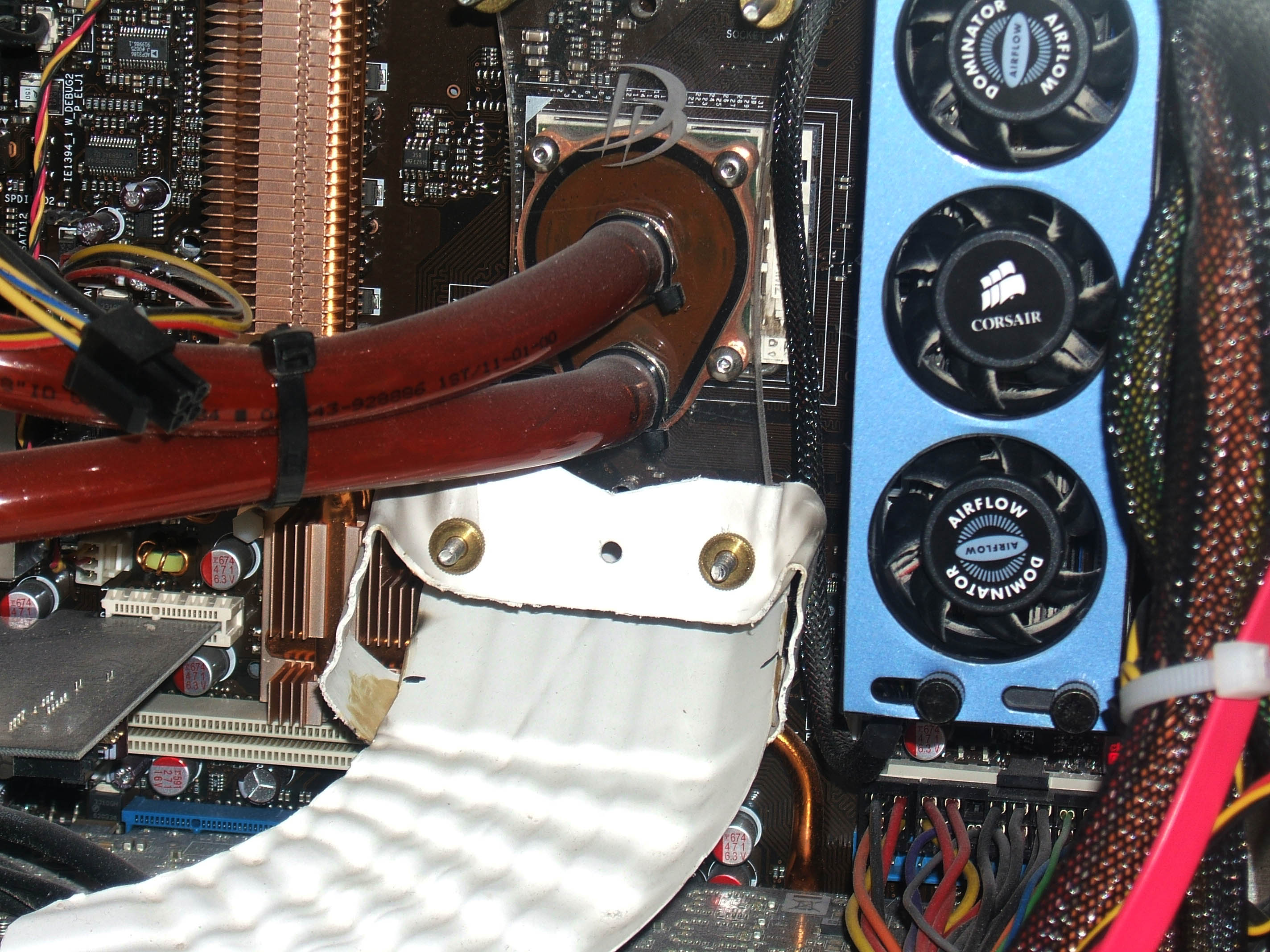
had any problems. Danger Den was my cooling block supplier. They have since
increased their inventory with entire kits, video card and chipset waterblocks
and radiators. They supplied the waterblock, mounting hardware and thorough instructions.
|
|
|
|
|
|
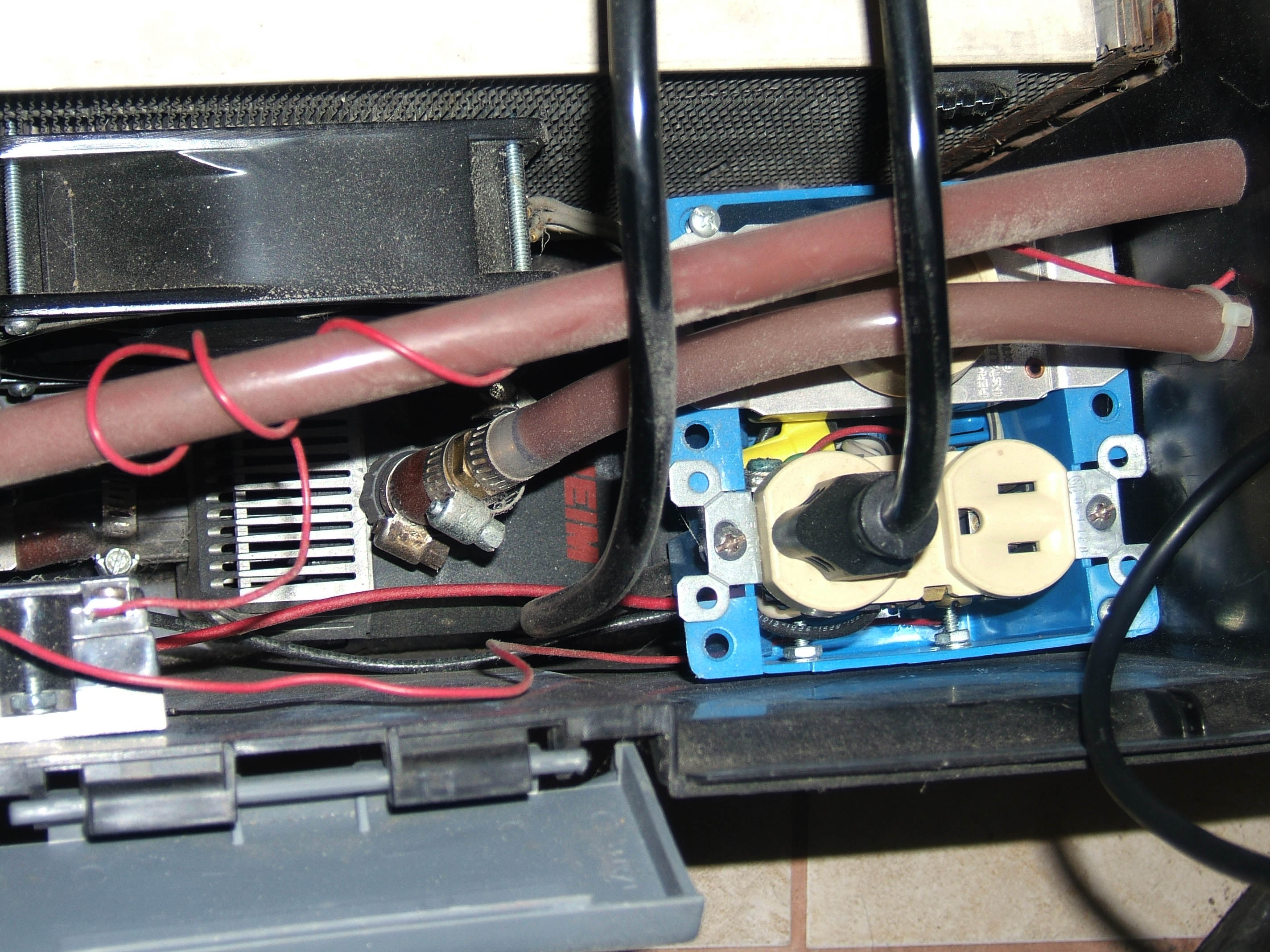
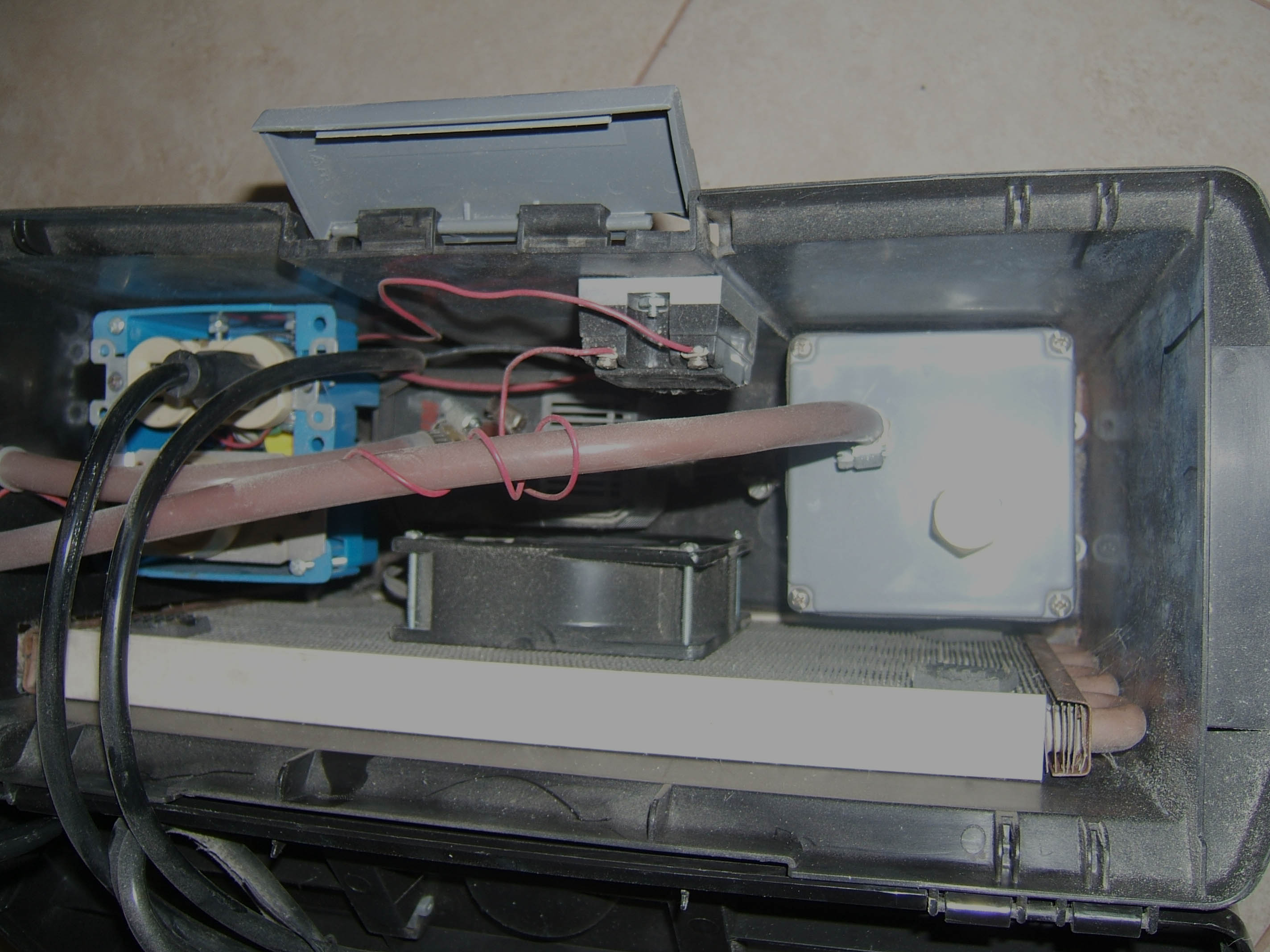
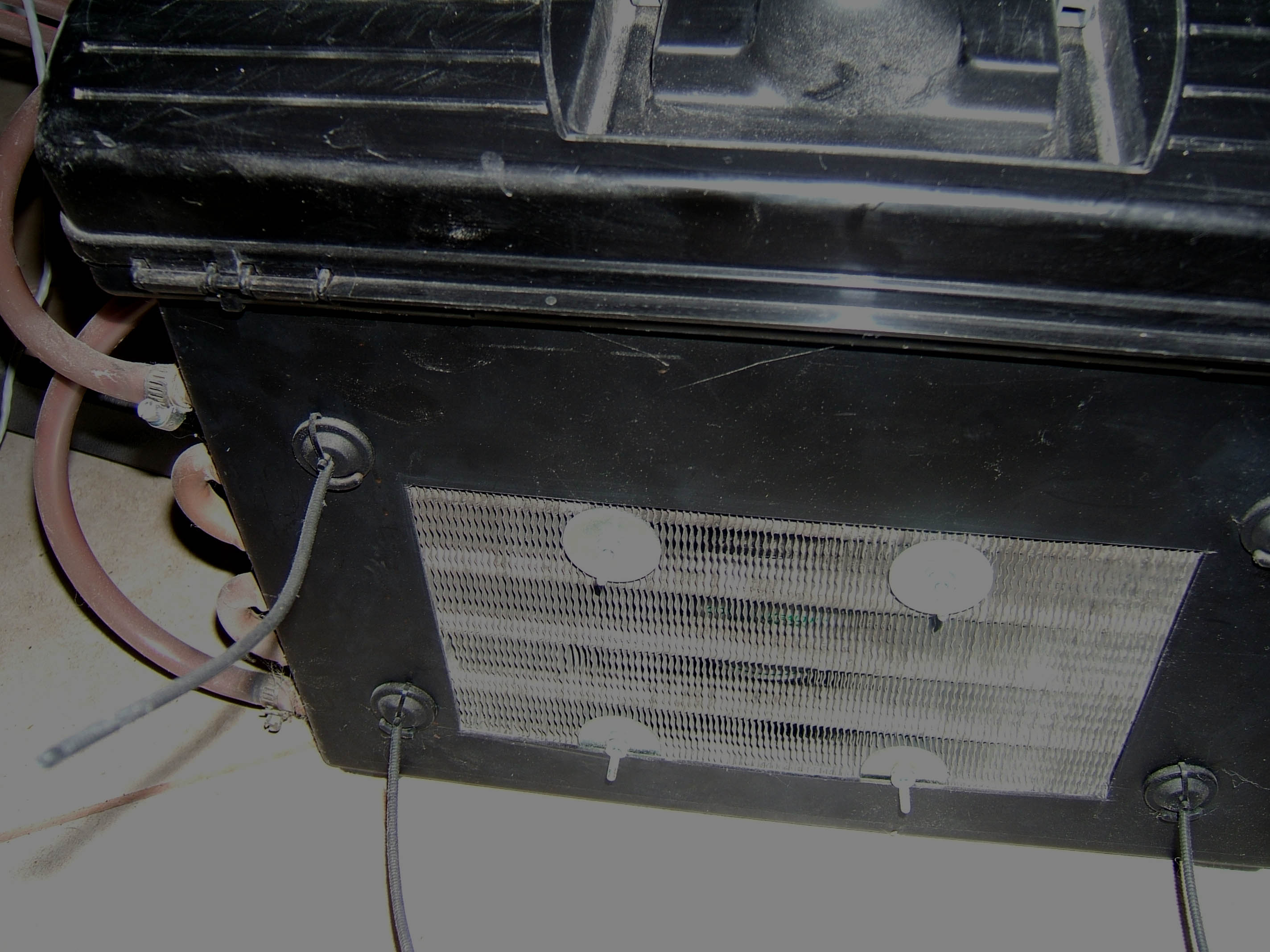
The radiator is an aftermarket tranny cooler I found in a junkyard costing
me $10. The reservoir is a square plastic outdoor grade electrical box I bought
at Lowes for $5. The fan is an AC fan I bought at Jameco for less than $10. The
enclosure is a plastic file case I found at Walmart for less than for $10. I also
included a dimmer switch in this design because I was not sure how loud the fan
would be and wanted the ability to dial down its speed. I also wanted to include
a relay, which would automatically turn the cooling system on when the computer
boots up. I decided to hold off on the relay for a later design; a decision I would
come to regret later.
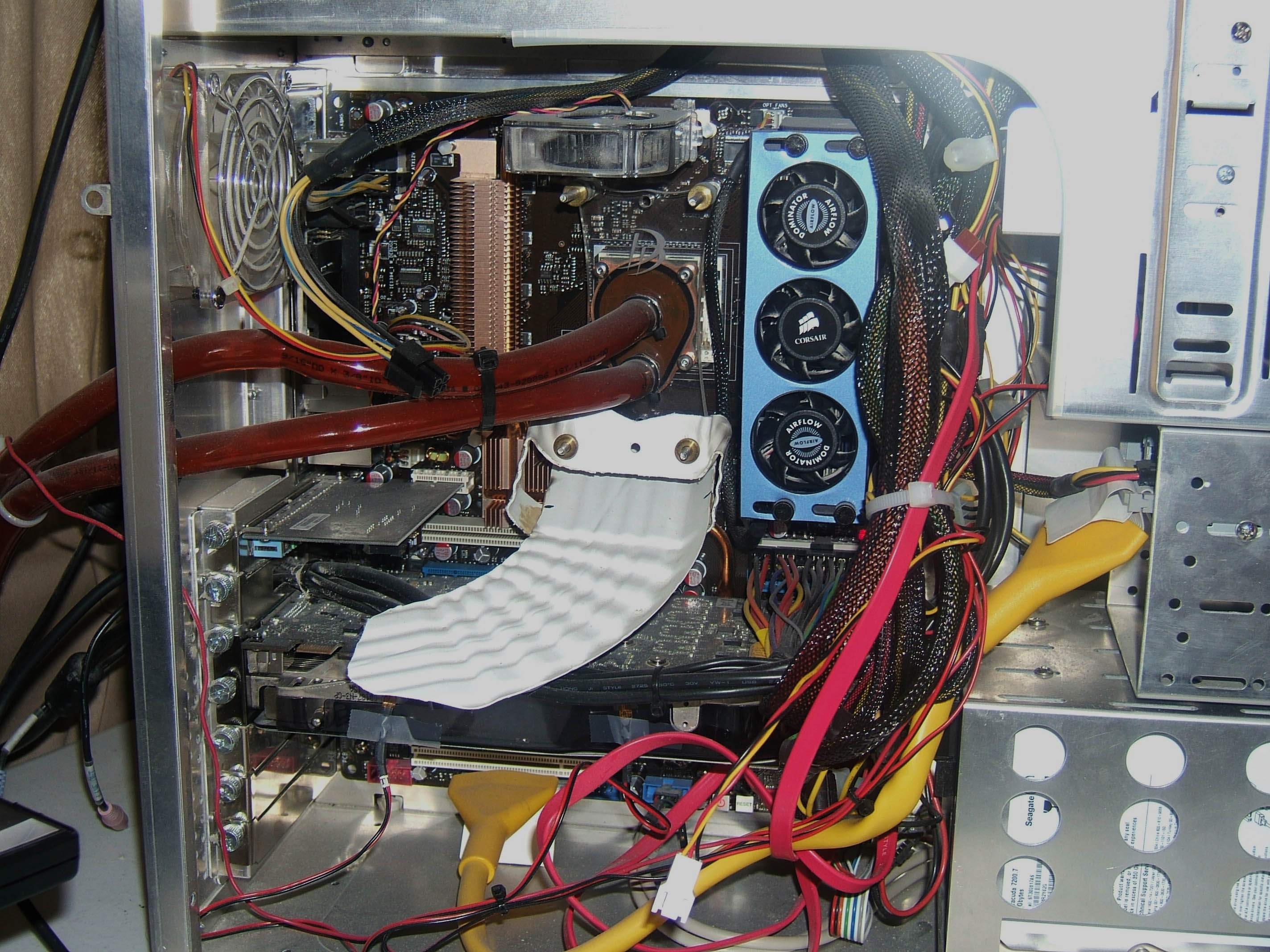
I used a hard poly pipe for most of the design, but made a soft pipe transition
where the pipe enters the PC case itself. I was worried that the hard pipe would
put an undesired pressure on the waterblock causing it to shift it away from the
processor. When I pick up the computer to move it to a different location the soft
pipe going through the case remains still. I also chose not to use soft pipe throughout
the entire design because I did not want a scenario where the pipe collapses and
prevents water from circulating.
|
|
|
|
|
|
The original design had a simple switch on the cooler case and would be turn on
before the computer was booted up. This worked for about a year until one day I
inadvertently shut down the computer then shut off the cooler and left the house.
What I didn't know was that the computer failed to shut down and ran until it fried
the processor. It got so hot that the waterblock, which is a two-piece unit soldered
together, melted the solder away from the block. The solution is of course a relay.
I ran a wire from the PC along the length of pipe into the cooler case and connected to
a relay, which activates when the computer gets turn on. Another design problem here is
that the cooler case has its own electrical plug, so if I neglect to plug in the cooler
case the relay won't do anything for me. I of course make sure this does not happen,
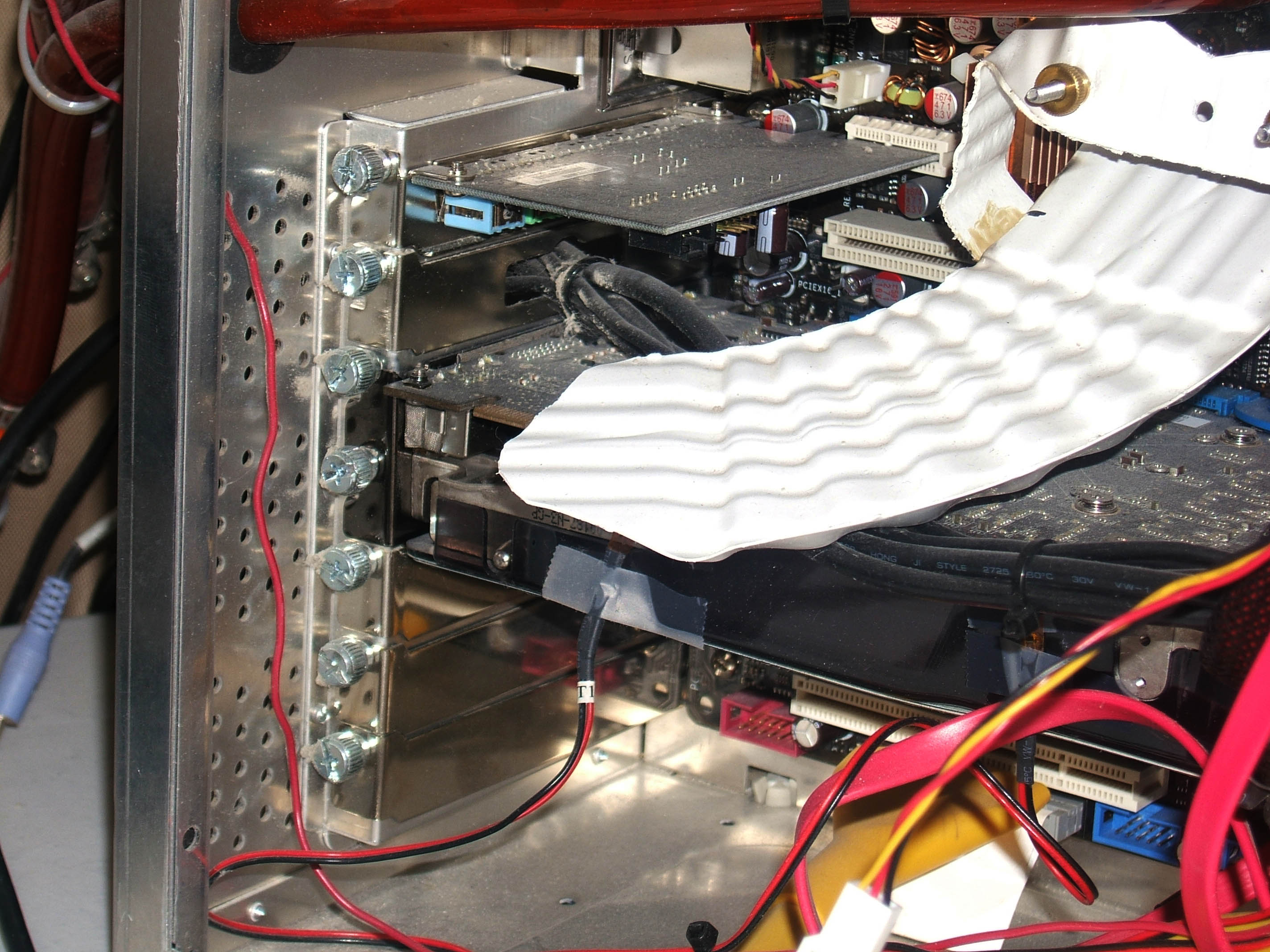
but it is far from bulletproof. I did have initial reservations with putting a waterblock
over my expensive video card. My solution was to take a plastic gutter downspout elbow
and cut it down to fit under the waterblock and over the video card. Fortunately I have
never had to test it yet.
|
|
|
|